
 EN
EN


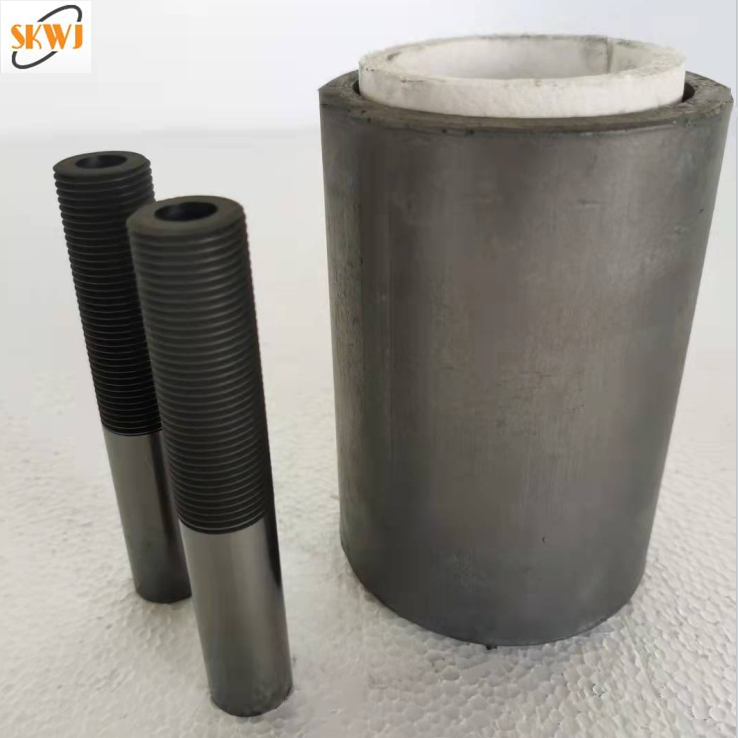
Graphite stands as one of the most versatile and reliable materials in industrial applications where extreme conditions demand exceptional performance. This carbon-based material has earned its reputation through decades of proven reliability in environments that would destroy conventional materials. Industries ranging from aerospace to semiconductor manufacturing rely on graphite's unique properties to maintain operations under the most challenging thermal and chemical conditions. The material's crystalline structure provides an inherent stability that makes it indispensable for critical applications where failure is not an option.
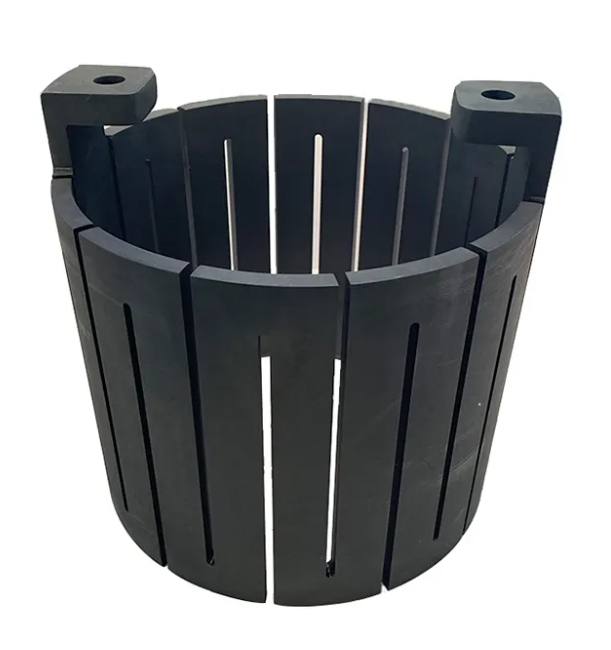
The exceptional characteristics of graphite stem from its layered crystal lattice structure, where carbon atoms form strong covalent bonds within layers while maintaining weaker van der Waals forces between layers. This unique arrangement grants graphite remarkable thermal conductivity, chemical inertness, and mechanical stability across wide temperature ranges. Manufacturing processes have refined synthetic graphite production to achieve consistent quality and performance specifications that meet the demanding requirements of modern industrial applications.
Fundamental Properties of Graphite Materials
Crystal Structure and Atomic Arrangement
The hexagonal crystal structure of graphite creates a material with anisotropic properties that vary significantly along different crystallographic axes. Within the basal plane, carbon atoms form strong sp2 hybridized bonds that create exceptional in-plane strength and thermal conductivity. The weaker interlayer forces allow for controlled expansion and contraction without structural failure, making graphite particularly suitable for thermal cycling applications where other materials would crack or degrade.
This atomic arrangement also provides graphite with excellent lubrication properties while maintaining structural integrity under mechanical stress. The ability of graphite layers to slide past one another without breaking the overall crystal structure contributes to its durability in high-temperature mechanical applications. Engineers leverage these properties when selecting graphite for components that must withstand both thermal and mechanical stresses simultaneously.
Thermal Conductivity Characteristics
Graphite exhibits thermal conductivity values that can exceed those of many metals, particularly along the basal plane direction. High-quality synthetic graphite can achieve thermal conductivities of 400-2000 W/mK depending on the grade and manufacturing process. This exceptional heat transfer capability makes graphite essential for thermal management applications where efficient heat dissipation is critical for system performance and reliability.
The temperature-dependent behavior of graphite thermal conductivity shows remarkable stability across operating ranges that would compromise other materials. Unlike metals that experience decreased thermal conductivity at elevated temperatures, graphite maintains consistent performance, making it ideal for high-temperature heat exchangers and thermal interface applications. This stability ensures predictable thermal behavior in critical systems where temperature control is paramount.
Chemical Resistance and Inert Properties
Oxidation Resistance at High Temperatures
The chemical stability of graphite in oxidizing environments depends significantly on temperature, atmosphere composition, and material grade. Pure graphite begins to oxidize appreciably in air at temperatures above 400°C, but this threshold can be extended through protective coatings or controlled atmosphere operation. In many industrial applications, graphite operates in inert or reducing atmospheres where oxidation is not a concern, allowing for continuous operation at temperatures exceeding 3000°C.
Advanced surface treatments and impregnation techniques have developed specialized graphite grades with enhanced oxidation resistance. These treated materials extend the operational envelope of graphite components in air or mildly oxidizing environments, broadening their application scope in industrial processes where complete atmospheric control is impractical or economically unfavorable.
Chemical Compatibility with Aggressive Media
Graphite demonstrates exceptional resistance to most acids, bases, and organic solvents across a wide temperature range. This chemical inertness makes graphite particularly valuable in chemical processing equipment where corrosion resistance is essential for both safety and economic operation. The material's stability in contact with molten metals, salts, and aggressive chemical solutions has established it as a preferred choice for crucibles, electrodes, and process vessels.
The non-reactive nature of graphite extends to biological and pharmaceutical applications where contamination must be minimized. Unlike many metals that can introduce trace elements into processes, graphite maintains chemical purity while providing the thermal and mechanical properties required for demanding applications. This combination of chemical neutrality and performance characteristics makes graphite indispensable in industries where product purity is critical.
Thermal Shock Resistance and Dimensional Stability
Rapid Temperature Change Management
The low coefficient of thermal expansion of graphite, combined with its high thermal conductivity, creates excellent thermal shock resistance that surpasses most ceramic and metallic materials. This property allows graphite components to survive rapid heating and cooling cycles without developing thermal stress cracks. The material's ability to conduct heat rapidly throughout its structure minimizes temperature gradients that typically cause thermal shock failure in other materials.
Industrial processes that involve rapid thermal cycling, such as heat treating or crystal growth operations, rely on graphite's thermal shock resistance to maintain equipment reliability. The material's tolerance for sudden temperature changes reduces maintenance requirements and extends component service life in applications where thermal transients are unavoidable. This reliability translates to improved process uptime and reduced operational costs.
Dimensional Precision Under Thermal Stress
Graphite maintains dimensional stability across wide temperature ranges, making it essential for precision applications where thermal expansion must be minimized. High-quality isotropic graphite grades exhibit extremely low and predictable thermal expansion coefficients, enabling the design of components that maintain tight tolerances even under severe thermal conditions. This dimensional stability is crucial in semiconductor manufacturing and precision machining applications.
The predictable thermal expansion behavior of graphite allows engineers to design components with precise clearances and fits that remain functional across the entire operating temperature range. This capability is particularly valuable in mechanical assemblies where differential thermal expansion between components could cause binding, excessive wear, or catastrophic failure. Graphite's thermal stability enables the creation of reliable mechanisms for high-temperature applications.
Industrial Applications Leveraging Graphite Properties
Semiconductor and Electronics Manufacturing
The semiconductor industry extensively utilizes graphite for its combination of high-temperature stability, chemical purity, and dimensional precision. Graphite components serve as susceptors, fixtures, and heating elements in crystal growth furnaces where silicon wafers and compound semiconductors are produced. The material's ability to maintain uniform temperature distribution while resisting contamination makes it essential for achieving the quality standards required in modern electronics manufacturing.
Advanced graphite grades designed for semiconductor applications undergo rigorous purification processes to minimize trace impurities that could affect semiconductor device performance. These ultra-pure graphite materials enable the production of high-performance electronic components while maintaining the thermal management capabilities necessary for processing at elevated temperatures. The reliability of graphite in these applications directly impacts the quality and yield of semiconductor manufacturing processes.
Metallurgical and Steel Production Processes
Steel production and metal refining operations depend heavily on graphite electrodes and refractory components that can withstand the extreme conditions of electric arc furnaces and induction heating systems. Graphite electrodes conduct the massive electrical currents required for melting steel while maintaining structural integrity under temperatures exceeding 3000°C. The material's electrical conductivity and thermal stability make it irreplaceable in modern steelmaking processes.
Beyond electrodes, graphite serves as crucible material for melting and refining specialty metals and alloys. The chemical inertness of graphite prevents contamination of high-purity metals while providing the thermal properties necessary for efficient heat transfer. This combination of properties enables the production of advanced materials with controlled compositions and properties essential for aerospace and high-technology applications.
Specialized Graphite Grades for Extreme Conditions
Isotropic Graphite for Uniform Performance
Isotropic graphite represents the pinnacle of graphite engineering, offering uniform properties in all directions through specialized manufacturing processes. This material eliminates the directional property variations inherent in conventional graphite, providing consistent performance regardless of orientation. The isotropic structure makes this graphite grade ideal for complex geometries and applications where directional effects could compromise performance or reliability.
Manufacturing processes for isotropic graphite involve careful control of raw material selection, forming techniques, and heat treatment cycles to achieve the desired property uniformity. The resulting material exhibits excellent machinability, dimensional stability, and thermal shock resistance that exceeds conventional graphite grades. These enhanced properties justify the higher cost of isotropic graphite in critical applications where performance cannot be compromised.
Pyrolytic Graphite for Ultimate Performance
Pyrolytic graphite represents the extreme end of graphite performance, manufactured through chemical vapor deposition processes that create nearly perfect crystal structure. This material exhibits thermal conductivity values approaching theoretical limits while maintaining exceptional chemical purity and dimensional stability. The highly oriented crystal structure of pyrolytic graphite provides anisotropic properties that can be exploited for specialized thermal management applications.
Applications for pyrolytic graphite include spacecraft heat shields, high-performance heat sinks, and precision thermal interface materials where conventional graphite grades cannot meet performance requirements. The manufacturing complexity and cost of pyrolytic graphite limit its use to applications where its unique properties are essential for mission success. Despite the premium cost, pyrolytic graphite enables capabilities that would be impossible with other materials.
Future Developments and Emerging Applications
Advanced Manufacturing Techniques
Modern graphite manufacturing continues to evolve with advances in processing technology, raw material quality, and quality control methods. Improved purification techniques enable the production of ultra-pure graphite grades with impurity levels measured in parts per billion, meeting the stringent requirements of advanced semiconductor and nuclear applications. These manufacturing improvements expand the potential applications for graphite while improving consistency and reliability.
Additive manufacturing techniques are beginning to enable the production of complex graphite geometries that were previously impossible or economically unfeasible. These advanced manufacturing methods allow for the creation of internal cooling channels, optimized heat transfer surfaces, and integrated assemblies that maximize the performance advantages of graphite materials. The ability to manufacture complex shapes opens new possibilities for thermal management and chemical processing applications.
Composite and Hybrid Material Systems
Research into graphite-based composite materials aims to combine the thermal and chemical stability of graphite with enhanced mechanical properties or specialized functionalities. Carbon fiber reinforced graphite composites offer improved strength and toughness while maintaining the essential thermal properties that make graphite valuable. These hybrid materials expand the application envelope where graphite properties are desired but mechanical requirements exceed the capabilities of monolithic graphite.
Nanostructured graphite materials and graphene-enhanced composites represent emerging frontiers in high-performance material development. These advanced materials promise to deliver enhanced thermal conductivity, electrical properties, and mechanical performance while maintaining the chemical stability and high-temperature capability of traditional graphite. The development of these next-generation materials will likely expand graphite applications into new industries and demanding operational environments.
FAQ
What makes graphite more thermally stable than other carbon materials
Graphite achieves superior thermal stability through its highly ordered crystalline structure where carbon atoms are arranged in stable hexagonal layers. This arrangement creates strong covalent bonds within layers that resist thermal decomposition up to extremely high temperatures. Unlike amorphous carbon materials that lack this ordered structure, graphite maintains its properties and dimensional stability even when exposed to temperatures exceeding 3000°C in inert atmospheres. The crystalline structure also provides predictable thermal expansion behavior that allows for reliable design calculations in high-temperature applications.
How does graphite maintain chemical inertness in aggressive environments
The chemical inertness of graphite results from the stable electron configuration in its sp2 hybridized carbon structure, which creates a chemically satisfied state that resists reaction with most chemicals. The layered crystal structure presents minimal reactive sites to aggressive media, and the strong carbon-carbon bonds within the graphite lattice require significant energy to break. This inherent chemical stability allows graphite to maintain its integrity when exposed to acids, bases, molten metals, and other corrosive substances that would rapidly attack metallic or ceramic materials.
Why does graphite perform better than metals in thermal cycling applications
Graphite outperforms metals in thermal cycling due to its low coefficient of thermal expansion combined with exceptional thermal conductivity. While metals expand significantly with temperature increases and create thermal stresses during cycling, graphite expands minimally and conducts heat rapidly to minimize temperature gradients. The material's thermal shock resistance prevents crack formation during rapid temperature changes, and its dimensional stability maintains component integrity through repeated thermal cycles. These properties result in longer service life and improved reliability compared to metallic alternatives in thermal cycling environments.
What factors determine the selection of graphite grade for specific applications
Graphite grade selection depends on several critical factors including operating temperature range, chemical environment, mechanical stress requirements, and dimensional precision needs. Applications requiring isotropic properties benefit from specialized processing methods, while high-purity requirements may necessitate premium grades with enhanced purification. Thermal conductivity requirements, electrical properties, and oxidation resistance also influence grade selection. The specific manufacturing process, whether molded or extruded, affects grain structure and properties. Cost considerations must be balanced against performance requirements to select the optimal graphite grade that meets application demands while maintaining economic viability.
Table of Contents
- Fundamental Properties of Graphite Materials
- Chemical Resistance and Inert Properties
- Thermal Shock Resistance and Dimensional Stability
- Industrial Applications Leveraging Graphite Properties
- Specialized Graphite Grades for Extreme Conditions
- Future Developments and Emerging Applications
-
FAQ
- What makes graphite more thermally stable than other carbon materials
- How does graphite maintain chemical inertness in aggressive environments
- Why does graphite perform better than metals in thermal cycling applications
- What factors determine the selection of graphite grade for specific applications

