
 EN
EN


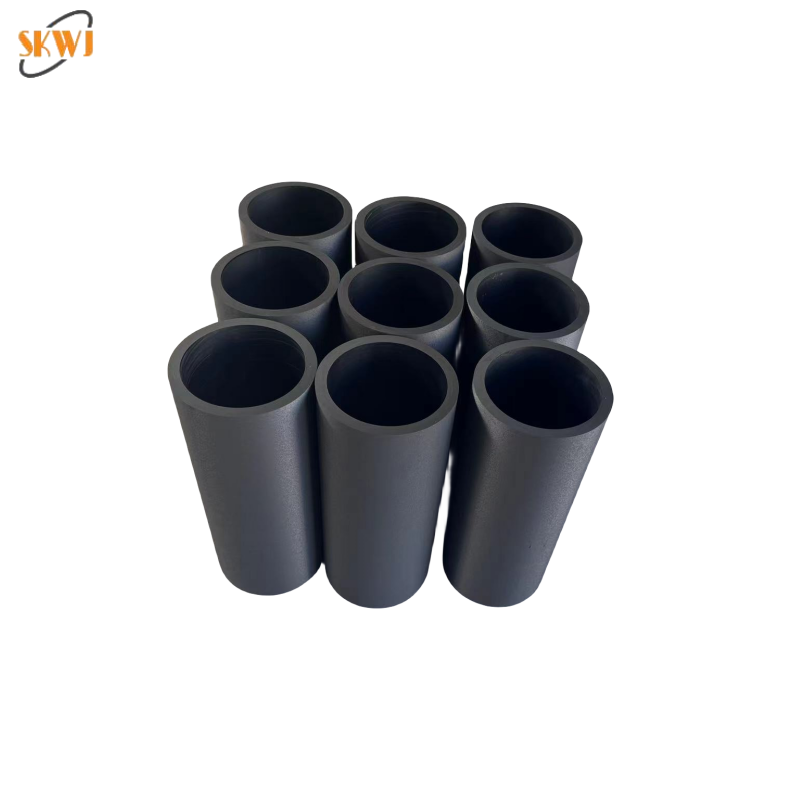
Industrial processes operating at extreme temperatures demand materials that can withstand intense thermal conditions while maintaining structural integrity and performance reliability. Graphite material has emerged as a critical component in high-temperature applications across multiple industries, from semiconductor manufacturing to metallurgy. The unique properties of graphite material enable it to perform exceptionally well in environments where conventional materials would fail, making it an indispensable choice for engineers and manufacturers seeking optimal thermal management solutions.
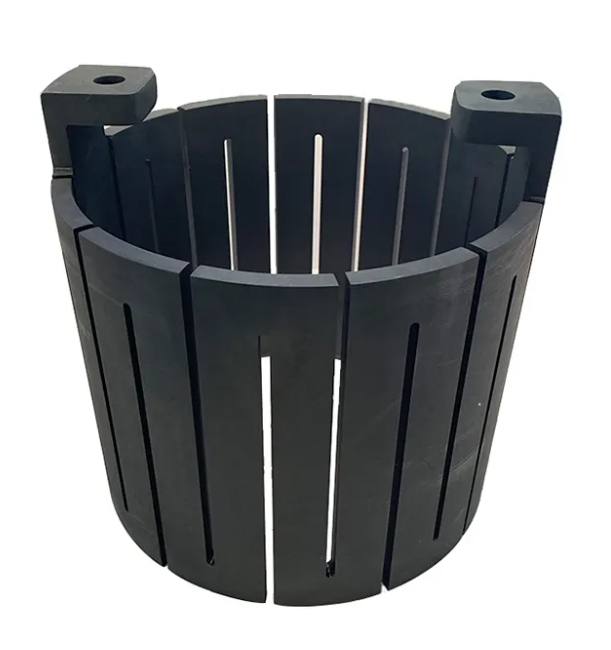
The performance characteristics of graphite material in high-temperature environments directly impact process efficiency, product quality, and operational costs. Understanding how graphite material behaves under extreme thermal stress provides valuable insights for industrial applications requiring consistent heat transfer, chemical resistance, and dimensional stability. Modern industrial processes increasingly rely on advanced graphite material formulations to achieve precise temperature control and extended operational lifespans in challenging manufacturing environments.
Thermal Properties of Graphite Material in Industrial Applications
High-Temperature Conductivity and Heat Transfer
The exceptional thermal conductivity of graphite material makes it ideal for applications requiring efficient heat distribution across large surface areas. Unlike metallic materials that may experience thermal expansion issues, graphite material maintains consistent thermal performance even at temperatures exceeding 3000°C. This stability allows industrial processes to achieve uniform heating patterns, reducing hot spots and ensuring consistent product quality throughout manufacturing cycles.
Graphite material exhibits anisotropic thermal properties, meaning heat conduction varies depending on the crystal orientation. In high-temperature industrial processes, this characteristic can be leveraged to direct heat flow in specific directions, optimizing energy efficiency and process control. The thermal diffusivity of graphite material remains relatively stable across wide temperature ranges, providing predictable performance in complex thermal management systems.
Temperature Resistance and Structural Integrity
One of the most remarkable properties of graphite material is its ability to maintain structural integrity at extreme temperatures where most materials would degrade or fail completely. The carbon-carbon bonds in graphite material actually strengthen at elevated temperatures, making it increasingly robust as thermal stress increases. This unique behavior allows industrial processes to operate at higher temperatures without compromising equipment reliability or product consistency.
The coefficient of thermal expansion for graphite material is relatively low compared to metals and ceramics, minimizing dimensional changes during heating and cooling cycles. This stability prevents stress concentrations that could lead to component failure, ensuring consistent performance throughout extended high-temperature operations. Industrial processes benefit from reduced maintenance requirements and improved operational reliability when utilizing high-quality graphite material components.
Chemical Resistance and Corrosion Protection
Inert Behavior in Aggressive Environments
Graphite material demonstrates exceptional chemical inertness in high-temperature environments, resisting reaction with most acids, bases, and organic compounds. This chemical stability makes graphite material particularly valuable in processes involving corrosive atmospheres or reactive chemicals at elevated temperatures. Industrial applications such as chemical processing, metal refining, and semiconductor manufacturing rely on this resistance to maintain process purity and prevent contamination.
The non-reactive nature of graphite material extends to interactions with molten metals and salts, making it suitable for crucible applications and high-temperature containment systems. Unlike ceramic materials that may react with certain molten materials, graphite material provides a stable interface that preserves the integrity of both the container and the processed materials. This characteristic is particularly important in precision manufacturing processes where material purity is critical.
Oxidation Resistance and Protective Coatings
While graphite material exhibits excellent performance in inert or reducing atmospheres, oxidation can occur in oxygen-rich environments at elevated temperatures. Modern industrial applications often employ protective coatings or controlled atmospheres to maximize the performance of graphite material components. These protective measures extend operational lifespans and maintain consistent performance characteristics throughout extended service periods.
Advanced surface treatments and coating technologies have been developed to enhance the oxidation resistance of graphite material without compromising its beneficial thermal and mechanical properties. These innovations allow industrial processes to utilize graphite material in previously challenging environments, expanding the range of applications where this versatile material can provide optimal performance.
Mechanical Properties Under Thermal Stress
Strength Characteristics at Elevated Temperatures
The mechanical strength of graphite material exhibits unique behavior at high temperatures, often increasing with temperature up to certain thresholds before eventually declining at extreme conditions. This temperature-dependent strength profile allows industrial processes to optimize loading conditions based on operating temperatures, maximizing component utilization while maintaining safety margins. The compressive strength of graphite material typically exceeds its tensile strength, making it well-suited for applications involving primarily compressive loads.
Flexural strength and modulus of elasticity in graphite material remain relatively stable across moderate temperature ranges, providing consistent mechanical response in dynamic loading conditions. This stability is crucial for industrial processes involving thermal cycling, where repeated heating and cooling could cause fatigue failure in less suitable materials. The predictable mechanical behavior of graphite material enables engineers to design systems with confidence in long-term performance reliability.
Thermal Shock Resistance and Fatigue Performance
Graphite material demonstrates superior thermal shock resistance compared to ceramic alternatives, making it ideal for processes involving rapid temperature changes or uneven heating patterns. The combination of high thermal conductivity and low thermal expansion coefficient allows graphite material to distribute thermal stress effectively, preventing crack initiation and propagation that could compromise component integrity.
The fatigue performance of graphite material under cyclic thermal loading exceeds that of many competing materials, enabling extended service life in applications involving repeated heating and cooling cycles. This durability translates to reduced maintenance costs and improved process uptime, providing significant economic benefits in industrial operations where equipment availability is critical to profitability.
Process Optimization Through Graphite Material Selection
Grade Selection and Property Optimization
Different grades of graphite material offer varying combinations of properties that can be matched to specific industrial process requirements. Fine-grain graphite material provides superior surface finish and dimensional stability, making it ideal for precision applications requiring tight tolerances. Coarse-grain varieties offer enhanced thermal conductivity and may be more cost-effective for applications where surface finish is less critical.
Isostatic and extruded graphite material variants provide different property profiles that can be optimized for specific loading directions and thermal gradients. Understanding these differences allows process engineers to select the most appropriate graphite material grade for their specific application requirements, maximizing performance while optimizing material costs and processing complexity.
Design Considerations for High-Temperature Applications
Successful implementation of graphite material in high-temperature industrial processes requires careful consideration of thermal expansion, stress distribution, and interface design. Component geometry must account for the anisotropic properties of graphite material, ensuring that thermal and mechanical loads are oriented to take advantage of the material's strongest characteristics.
Joint design and assembly methods for graphite material components must accommodate thermal movement while maintaining structural integrity and thermal contact. Mechanical fastening systems should account for differential thermal expansion between graphite material and other system components, preventing stress concentrations that could lead to premature failure or performance degradation.
Impact on Manufacturing Efficiency and Quality
Energy Efficiency and Process Control
The superior thermal properties of graphite material contribute significantly to energy efficiency in high-temperature industrial processes. Rapid heat-up rates and uniform temperature distribution reduce energy consumption while improving process control precision. The thermal mass characteristics of graphite material can be optimized to provide thermal buffering, smoothing temperature fluctuations and maintaining stable process conditions.
Process uniformity achieved through proper graphite material selection directly impacts product quality and yield rates. Consistent thermal profiles eliminate hot spots and cold zones that could cause product defects, reducing waste and improving overall manufacturing efficiency. The predictable performance of graphite material enables tighter process control, leading to improved product consistency and reduced quality variation.
Maintenance Requirements and Operational Reliability
The durability and chemical inertness of graphite material result in reduced maintenance requirements compared to alternative materials in high-temperature applications. Extended service intervals reduce downtime and maintenance costs while improving overall equipment effectiveness. The non-contaminating nature of graphite material eliminates concerns about material degradation affecting product purity or process chemistry.
Operational reliability improvements from graphite material implementation include reduced unexpected failures, more predictable component replacement schedules, and improved process stability. These benefits translate to improved production planning capabilities and reduced inventory requirements for spare components, providing operational and financial advantages throughout the equipment lifecycle.
FAQ
What temperature ranges can graphite material withstand in industrial applications?
Graphite material can operate continuously at temperatures up to 3000°C in inert atmospheres, making it suitable for the most demanding high-temperature industrial processes. In oxidizing environments, operating temperatures are typically limited to 400-600°C without protective coatings, though advanced surface treatments can extend this range significantly. The exact temperature capability depends on the specific grade of graphite material, atmosphere composition, and duration of exposure.
How does graphite material compare to ceramic alternatives in high-temperature processes?
Graphite material offers superior thermal conductivity and thermal shock resistance compared to most ceramic materials, making it better suited for applications involving rapid temperature changes or high heat flux requirements. While ceramics may offer better oxidation resistance in some environments, graphite material provides more predictable thermal and mechanical behavior, easier machining characteristics, and often lower overall system costs when properly applied.
What factors should be considered when selecting graphite material grades for specific industrial processes?
Key selection factors include operating temperature, atmosphere composition, mechanical loading requirements, dimensional tolerances, and thermal cycling frequency. Fine-grain graphite material offers better surface finish and dimensional stability, while coarse-grain varieties provide enhanced thermal conductivity. The manufacturing method (isostatic, extruded, or molded) affects property directionality and should be matched to the primary stress and heat flow directions in the application.
Can graphite material performance be enhanced through surface treatments or coatings?
Yes, various surface treatments and protective coatings can significantly enhance graphite material performance in challenging environments. Anti-oxidation coatings extend operating temperature ranges in oxidizing atmospheres, while surface impregnation treatments can improve mechanical strength and reduce permeability. These enhancements must be carefully selected to maintain the beneficial thermal and chemical properties of the base graphite material while addressing specific application requirements.
Table of Contents
- Thermal Properties of Graphite Material in Industrial Applications
- Chemical Resistance and Corrosion Protection
- Mechanical Properties Under Thermal Stress
- Process Optimization Through Graphite Material Selection
- Impact on Manufacturing Efficiency and Quality
-
FAQ
- What temperature ranges can graphite material withstand in industrial applications?
- How does graphite material compare to ceramic alternatives in high-temperature processes?
- What factors should be considered when selecting graphite material grades for specific industrial processes?
- Can graphite material performance be enhanced through surface treatments or coatings?

