
 EN
EN


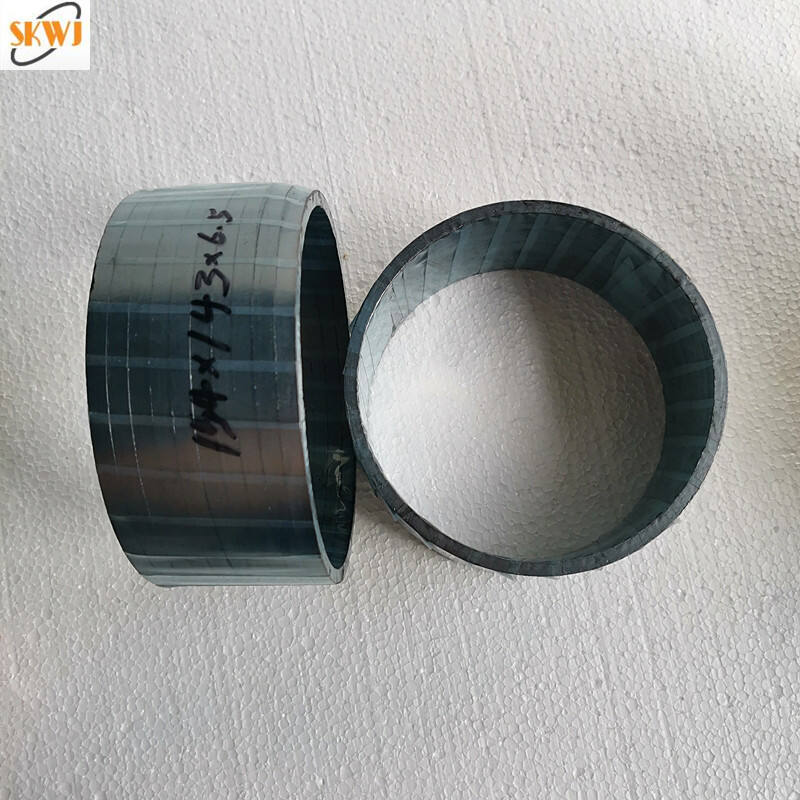
Industrial applications requiring exceptional thermal management and structural integrity increasingly rely on advanced carbon materials to meet demanding performance standards. Among these materials, graphite blocks have emerged as critical components in high-temperature processing, metallurgy, and specialized manufacturing environments. The density characteristics of these carbon-based materials directly influence their mechanical properties, thermal conductivity, and overall performance in industrial settings. Understanding how graphite block density affects structural stability becomes essential for engineers and procurement specialists seeking optimal solutions for their applications.
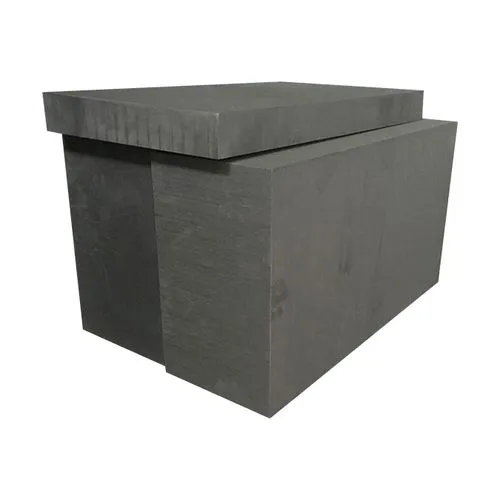
The relationship between density and structural performance in graphite materials involves complex interactions between crystal structure, porosity, and manufacturing processes. Higher density graphite blocks typically exhibit enhanced mechanical strength, improved thermal conductivity, and greater resistance to thermal shock. However, the optimal density for a specific application depends on various factors including operating temperatures, mechanical loads, and environmental conditions. Industries ranging from steel production to semiconductor manufacturing must carefully consider these density-related properties when selecting graphite block materials for critical applications.
Fundamental Properties of Graphite Block Density
Material Composition and Manufacturing Impact
The density of graphite blocks originates from their unique manufacturing processes and raw material selection. High-quality graphite blocks are typically produced through controlled carbonization and graphitization processes that eliminate impurities and optimize crystal structure. During these manufacturing stages, the arrangement of carbon atoms and the elimination of volatile compounds directly influence the final density characteristics. Advanced manufacturing techniques can achieve graphite block densities ranging from 1.6 to 2.2 grams per cubic centimeter, with higher densities generally correlating with improved structural properties.
Manufacturing parameters such as pressing pressure, heating rates, and graphitization temperatures significantly affect the final density of graphite blocks. Higher pressing pressures during forming stages typically result in denser materials with reduced porosity and improved mechanical properties. The graphitization temperature, often exceeding 2500°C, plays a crucial role in achieving optimal crystal structure and eliminating residual impurities that could compromise structural integrity. These manufacturing considerations make density a key indicator of overall material quality and performance potential.
Porosity and Microstructural Characteristics
The internal porosity of graphite blocks directly correlates with their density measurements and subsequent structural stability. Lower porosity levels typically result in higher density materials with enhanced mechanical strength and improved thermal conductivity. The size, distribution, and interconnectivity of pores within the graphite block structure influence various performance characteristics including thermal shock resistance, chemical resistance, and overall durability under industrial operating conditions.
Microstructural analysis reveals that higher density graphite blocks exhibit more uniform grain structures with reduced void spaces between carbon crystallites. This improved microstructural integrity translates to enhanced load-bearing capacity and better resistance to crack propagation under mechanical stress. The relationship between porosity and density becomes particularly important in applications involving rapid temperature cycling or exposure to corrosive environments where structural integrity must be maintained over extended operating periods.
Structural Stability Mechanisms
Mechanical Strength and Load Distribution
The mechanical strength of graphite blocks increases proportionally with material density due to improved atomic packing and reduced internal defects. Higher density materials exhibit enhanced compressive strength, improved flexural properties, and better resistance to impact loading. This relationship becomes critical in applications such as blast furnace linings, electrode manufacturing, and high-temperature structural components where graphite block materials must withstand significant mechanical stresses while maintaining dimensional stability.
Load distribution characteristics within dense graphite block structures demonstrate superior performance compared to lower density alternatives. The improved atomic bonding and reduced porosity in high-density materials create more uniform stress distribution patterns, reducing the likelihood of localized failure points. This enhanced load distribution capability makes dense graphite blocks particularly valuable in applications requiring long-term structural reliability under varying mechanical loads and thermal cycling conditions.
Thermal Expansion and Dimensional Stability
Thermal expansion characteristics of graphite blocks vary significantly with density, affecting their dimensional stability in high-temperature applications. Higher density materials typically exhibit more predictable thermal expansion coefficients and better dimensional stability across temperature ranges. This relationship becomes crucial in precision applications where thermal cycling could compromise component fit or system performance if dimensional changes exceed acceptable tolerances.
The anisotropic nature of graphite block thermal expansion requires careful consideration of density effects in different crystallographic directions. Dense graphite materials demonstrate reduced variation in thermal expansion between parallel and perpendicular orientations relative to the pressing direction, resulting in more predictable dimensional changes during thermal cycling. This improved dimensional stability makes high-density graphite blocks preferred for applications requiring precise tolerances and reliable performance across wide temperature ranges.
Industrial Application Considerations
High-Temperature Processing Equipment
In high-temperature processing applications, graphite block density directly influences equipment performance and operational reliability. Steel production facilities, aluminum smelting operations, and glass manufacturing processes rely on dense graphite blocks to maintain structural integrity while providing excellent thermal management. The enhanced thermal conductivity and mechanical strength of high-density graphite blocks enable these materials to withstand extreme operating conditions while maintaining dimensional stability and chemical resistance.
Furnace construction and refining operations particularly benefit from the superior properties of dense graphite blocks. The improved structural stability of high-density materials reduces maintenance requirements and extends equipment service life, resulting in significant cost savings over operational lifespans. These applications demand graphite block materials that can maintain their structural properties despite exposure to corrosive atmospheres, rapid temperature changes, and mechanical stresses from thermal expansion and contraction cycles.
Electrical and Electronic Applications
The electrical conductivity and structural stability of graphite blocks in electronic applications depend heavily on material density characteristics. Higher density graphite blocks provide improved electrical conductivity, reduced electrical resistance, and enhanced current-carrying capacity. These properties make dense graphite materials essential for electrode applications, electrical discharge machining, and various electronic component manufacturing processes where consistent electrical performance must be maintained.
Semiconductor manufacturing processes require graphite block materials with exceptional purity and structural stability to prevent contamination and ensure precise processing conditions. The enhanced structural integrity of high-density graphite blocks reduces particle generation and maintains dimensional accuracy during fabrication processes. This combination of electrical performance and structural reliability makes dense graphite materials indispensable for advanced manufacturing applications in the electronics industry.
Selection Criteria for Optimal Performance
Application-Specific Density Requirements
Selecting appropriate graphite block density requires careful analysis of specific application requirements including operating temperatures, mechanical loads, environmental conditions, and performance expectations. Applications involving extreme temperatures or corrosive environments typically benefit from higher density materials that provide enhanced chemical resistance and structural stability. Conversely, applications requiring rapid thermal cycling might optimize performance with moderate density materials that balance thermal shock resistance with mechanical strength.
Cost-benefit analysis plays a crucial role in determining optimal graphite block density for industrial applications. While higher density materials generally offer superior performance characteristics, the associated cost increases must be justified by improved operational reliability, extended service life, or enhanced process efficiency. Understanding the relationship between density and performance enables engineers to select materials that provide optimal value for specific applications while meeting all technical requirements.
Quality Assessment and Testing Methods
Accurate measurement and assessment of graphite block density requires standardized testing procedures that account for material variations and manufacturing tolerances. Density measurements typically employ immersion methods or geometric calculations combined with precise mass measurements to determine bulk density characteristics. Advanced characterization techniques including mercury intrusion porosimetry and gas adsorption analysis provide detailed information about pore structure and its relationship to overall density.
Quality control procedures for graphite block materials must establish acceptable density ranges that correlate with required performance characteristics. Statistical process control methods help maintain consistency in density characteristics across production batches, ensuring reliable performance in critical applications. Regular testing and monitoring of density-related properties enable manufacturers to identify process variations that could affect material performance and implement corrective measures to maintain quality standards.
Future Developments and Optimization Strategies
Advanced Manufacturing Techniques
Emerging manufacturing technologies continue to advance the capabilities for producing graphite blocks with optimized density characteristics tailored to specific applications. Advanced pressing techniques, improved raw material processing, and enhanced graphitization processes enable manufacturers to achieve higher densities while maintaining cost-effectiveness. These technological improvements expand the range of available density options and enable fine-tuning of material properties to meet increasingly demanding application requirements.
Research into alternative carbon sources and processing methods offers potential for developing graphite block materials with novel density-performance relationships. Nanotechnology applications and advanced carbon processing techniques may enable the production of graphite blocks with density gradients or localized property variations optimized for specific loading conditions. These innovative approaches could revolutionize how graphite block density is designed and controlled for maximum structural stability in demanding industrial applications.
Performance Modeling and Prediction
Computational modeling and simulation techniques increasingly support the optimization of graphite block density for specific applications. Finite element analysis methods can predict structural performance based on density characteristics, enabling engineers to select optimal materials before physical testing or deployment. These predictive capabilities reduce development costs and accelerate the implementation of graphite block solutions in new applications where structural stability is critical.
Machine learning approaches applied to historical performance data from various graphite block applications enable more accurate prediction of long-term structural stability based on density characteristics. These analytical tools help identify optimal density ranges for specific operating conditions and provide insights into failure mechanisms related to density variations. The integration of predictive modeling with real-world performance data continues to improve the accuracy of graphite block selection for maximum structural stability and operational reliability.
FAQ
What density range is optimal for high-temperature graphite block applications?
For high-temperature applications requiring maximum structural stability, graphite block densities between 1.85 and 2.2 grams per cubic centimeter typically provide optimal performance. These higher density materials offer enhanced mechanical strength, improved thermal conductivity, and better resistance to thermal shock while maintaining dimensional stability across wide temperature ranges. The specific optimal density depends on application requirements including maximum operating temperature, thermal cycling frequency, and mechanical loading conditions.
How does graphite block density affect thermal conductivity in industrial applications?
Higher density graphite blocks generally exhibit superior thermal conductivity due to improved crystal structure and reduced porosity that facilitates efficient heat transfer. Dense graphite materials can achieve thermal conductivities exceeding 100 W/mK compared to 50-80 W/mK for lower density alternatives. This enhanced thermal conductivity improves heat dissipation in applications such as heat exchangers, furnace components, and thermal management systems where efficient heat transfer is critical for optimal performance.
Can graphite block density be customized for specific structural requirements?
Yes, graphite block density can be customized through controlled manufacturing processes including raw material selection, pressing parameters, and graphitization conditions. Manufacturers can produce graphite blocks with densities tailored to specific applications by adjusting pressing pressures, particle size distributions, and heat treatment schedules. This customization capability enables optimization of structural properties for particular operating conditions while balancing performance requirements with cost considerations.
What testing methods accurately determine graphite block density for structural applications?
Accurate graphite block density measurement typically employs immersion methods using distilled water or other suitable liquids to determine bulk density values. Advanced characterization techniques including helium pycnometry provide true density measurements that account for closed porosity, while mercury intrusion porosimetry reveals detailed pore structure information. These testing methods enable comprehensive assessment of density characteristics and their relationship to structural performance in demanding industrial applications.
Table of Contents
- Fundamental Properties of Graphite Block Density
- Structural Stability Mechanisms
- Industrial Application Considerations
- Selection Criteria for Optimal Performance
- Future Developments and Optimization Strategies
-
FAQ
- What density range is optimal for high-temperature graphite block applications?
- How does graphite block density affect thermal conductivity in industrial applications?
- Can graphite block density be customized for specific structural requirements?
- What testing methods accurately determine graphite block density for structural applications?

